Distillation process
What are the steps of distillation? There are three types of distillation: simple, fractional and vacuum. Simple distillation requires six steps: 1. Select a heat source (storage heater, can burner, steam chamber, or water bath). 2. Clean, dry and collect the distillation cube.
What are the steps in distillation process?
Method 2 of 2: Distillation with lab equipment. Know the boiling point of the substance you want to distill. In general, simple distillation (as described here) works for substances with boiling points below 200°C. Pour the liquid into a distillation flask. Take the liquid you want to clean and pour it into the machine. Place the alembic on a heat source. Connect the capacitor.
What is the process of distillation used for?
Distillation is the process of separating the components of a mixture based on different boiling points. Examples of distillation applications include alcohol refining, desalination, crude oil refining and the production of liquefied gases from air.
What are some common examples of simple distillation?
Examples of oil refining by distillation. Catalytic decomposition. Ethanol purification. Coal processing. Thermolysis of mineral salts. Still. Production of perfumes. Purchase of alcoholic drinks. Drink distilled water. Wine oils.
What is a good rate of distillation?
A suitable distillation rate is about 20 drops per minute. The distillation must be slow enough to condense all the vapors in the condenser to liquid. Many organic compounds are highly flammable, and if the vapors pass through a condenser without condensation, they can ignite on contact with a heat source.
What are the examples of simple distillation?
Three examples of simple distillation mixtures Simple distillation. Simple distillation is performed by heating and cooling liquids to separate and purify them. Water distillation. An example of a simple distillation mixture involves separating the salt water to produce pure water and salt. Ethanol and water.
What are the 3 steps of distillation in science
The general process of alcohol distillation can be divided into 3 parts: fermentation, distillation and finishing. The next 3 articles on this blog will cover each of these topics in detail. In this issue, however, they give ourselves a brief overview of each segment.
 How is fractional distillation used to separate liquids?
Fractional distillation is often used to separate mixtures of liquids with close boiling points. It involves several stages of evaporation-condensation (which takes place in a distillation column). This process is also known as patching. The equipment required for fractional distillation of the mixture is shown below.
What is the reverse process of double distillation?
Repeating the process with the collected liquid to improve the purity of the product is called double distillation. While this term is more commonly used for liquids, the reverse process can be used to separate gases by liquefying components through changes in temperature and/or pressure.
 How is the distillation process dependent on Dalton's law?
When mixing liquids, the distillation process depends on Dalton's law and Raoult's law. According to Raoult's law, the partial pressure of a liquid component in an ideal liquid mixture is equal to the product of the vapor pressure of the pure component and its mole fraction.
 What are the 3 steps of distillation process
The general process of alcohol distillation can be divided into 3 parts: fermentation, distillation and finishing. The next 3 articles on this blog will cover each of these topics in detail.
What are examples of distillation?
Distillation is the process of separating the components of a mixture based on different boiling points. Examples of distillation applications include alcohol refining, desalination, crude oil refining and the production of liquefied gases from air. People have been living in the Indus Valley since at least 3000 BC. C. Distillation was used.
 What is a simple distillation apparatus?
Simple distillation. A simple distillation apparatus is a closed system, meaning that nothing opens to the air, and consists of a heat source, a distillation alembic containing a liquid to be distilled, a condenser line cooled by air or water, and a container.
 What is distillation procedure?
Distillation. Simple distillation is a process where two liquids with different boiling points can be separated. Simple distillation (the method described below) can be used effectively to separate liquids whose boiling points differ by at least fifty degrees.
 Gimme 3 steps lyrics
Lynyrd Skynyrd lyrics. Give me three steps. I cut the carpet. In a place called the Jar. With a girl named Linda Lou. When the man entered. With a ■■■ in his hand. And I was looking for you, you know who.
 What does the process of distillation involve?
Distillation is a process of converting a liquid into vapor, which is then condensed back into a liquid form. The simplest example is steam from a boiler being deposited as droplets of distilled water on a cold surface.
 What is the difference between distillation and condensation?
Therefore, the main difference between distillation and condensation is that distillation is a method of separation and condensation is the process of changing the phase of substances… 1.
 What is the process of distillation used for in cooking
Distillation is the process of separating the components of a mixture based on different boiling points. Examples of distillation applications include alcohol refining, desalination, crude oil refining and the production of liquefied gases from air. People have been living in the Indus Valley since at least 3000 BC. C. Distillation was used.
 What is the purpose of the process of distillation?
Distillation refers to the selective boiling and then condensing of a component into a liquid mixture. It is a separation method with which the concentration of a certain component in a mixture can be increased or (almost) pure components can be removed from the mixture.
When do you use fractional distillation in a mixture?
Fractional distillation. Fractional distillation is used when the boiling points of the components of the mixture are close to each other, as determined by Raoult's law. A fractionation column is used to separate the components used in a series of distillations called rectification.
How is vacuum distillation used to separate components?
Vacuum distillation is used to separate high boiling point components. Reducing the pressure in the appliance also lowers the boiling point. The rest of the process is similar to other forms of distillation.
 How is distillation used to separate heat sensitive components?
Steam distillation. Steam distillation is used to separate heat-sensitive components. Steam is added to the mixture, causing some of it to evaporate. This vapor cools and condenses into two liquid fractions.
Explain the process of distillation
Distillation is the process of separating the components of a mixture based on different boiling points. Examples of distillation applications include alcohol refining, desalination, crude oil refining and the production of liquefied gases from air. People have been living in the Indus Valley since at least 3000 BC. C. Distillation was used.
 What is the process of distillation used for in chemistry
Distillation is a common method of separating mixtures based on the differences in conditions required to change the phase of the mixture's components. To separate a liquid mixture, the liquid can be heated to force components with different boiling points into the gas phase.
What is a real life example of distillation?
Distillation is the process of separating the components of a mixture based on different boiling points. Examples of distillation applications include alcohol refining, desalination, crude oil refining and the production of liquefied gases from air. People have been living in the Indus Valley since at least 3000 BC. C. Distillation was used.
What is the process of distillation used for research
Most distillation methods used in industry and in laboratory research are variants of simple distillation. This basic operation requires the use of a still or retort to heat the liquid, a condenser to cool the vapor, and a container to collect the distillate.
What is the process of distillation used for in water
Distilling water is the process of boiling water until it evaporates and condenses, leaving behind impurities with different boiling points. Distillation gives pure pure water. It is an effective water treatment method to remove contaminants such as bacteria, heavy metals and chemicals.
 What are the disadvantages of the water distillation process?
- The distillation rate is usually very low (6 liters of water per sunny day).
- Not suitable for higher consumption requirements.
- The material needed for a distillation can still be difficult to obtain in some areas.
 What does the process of distilling do to water?
Water distillation is a water purification process that uses a heat source to evaporate the water and separate it from the contaminants it contains. In most cases, the undesirable elements are those that occur naturally in ground or surface water.
 How does the water distillation process work?
Distillation is a water purification process that uses a heat source to evaporate water and separate it from contaminants and other unwanted elements commonly found in ground and surface water. Distillation heats raw (untreated) water until the water reaches boiling point and begins to evaporate. The heat is then kept at a constant temperature to allow the water to evaporate and prevent other unwanted elements from evaporating.
 What is the process of distillation used for science
It is a separation method with which the concentration of a certain component in a mixture can be increased or (almost) pure components can be removed from the mixture. The distillation process takes advantage of the difference in boiling points of the components of the liquid mixture, converting one of them into a gaseous state.
 What is the process of distillation used for in writing
Definition of Distillation. Distillation is a common method of separating mixtures based on the differences in conditions required to change the phase of the mixture's components. To separate the liquid mixture, the liquid can be heated to bring the components with different boiling points into the gas phase.
 When do you use distillation to determine boiling point?
Distillation is used to purify a compound from non-volatile or less volatile materials. If different compounds in a mixture have different boiling points, when the mixture is fully distilled, they will separate into individual components. Distillation to determine the boiling point.
 How is distillation used in an organic chemistry laboratory?
In a modern organic chemical laboratory, distillation is a powerful tool for both identification and purification of organic compounds. The boiling point of a compound is one of the physical properties used to identify it. Distillation is used to purify a compound from non-volatile or less volatile materials.
Which is an example of a steam distillation method?
Steam distillation is an alternative method of achieving distillation at temperatures below the normal boiling point. It can be used if the material to be distilled is not mixed (not mixed) and does not react chemically with water. Examples of such materials include fatty acids and soybean oil.
 What are 3 examples of evaporation?
List of 30 examples of evaporative drying of clothes in the sun. Many people dry their freshly washed clothes in the sun. Dry the water in the streets. When it rains, clearly visible puddles often form on city streets, but their duration is very short. Evaporation of seas and oceans. Refreshing tea. Evaporation of sweat from your body. Dry moist soil.
What are some examples of fractional distillation?
- Petroleum Refining. If you ever get the chance to visit an oil refinery, you will see one of the most technologically advanced fractionation columns in the world.
- Alcohol production. Alcohol has been an important part of human culture for centuries and the oldest known evidence is 9,000 years old.
- Air separation.
 What are some real life examples of distillation systems
Examples of distillation. Salt water is converted into fresh water by distillation. Different fuels, such as gasoline, are separated from crude oil by distillation. Alcoholic drinks are produced through distillation.
What are some real life examples of distillation energy
Let's look at some examples of fractional distillation in your daily life. 1. Petroleum Refining 2. Alcohol Production 3. Air Separation 4.
Which is an example of the use of distillation?
Distillation is an efficient way to purify liquids or separate the components of a liquid mixture. An example of purification is the distillation of drinking water from seawater.
 How is crude oil produced in fractional distillation?
Fractional distillation of crude oil. Gasoline and many other chemicals are produced from petroleum by fractional distillation. Crude oil is heated to evaporate. Different fractions condense in certain temperature ranges.
How are vacuum distillations used in oil processing?
In oil processing, vacuum distillation is often performed in vacuum columns to separate the various gases released during the cooking phases of the oil. Therefore, the boiling of the hydrocarbons is accelerated. Ethanol purification.
 What is the procedure of simple distillation?
Simple distillation is a process where two liquids with different boiling points can be separated. Simple distillation (the method described below) can be used effectively to separate liquids with boiling points that differ by at least fifty degrees.
 What can simple distillation be used for?
Simple distillation can be used when the boiling points of two liquids differ significantly, or to separate liquids from solid or non-volatile components. Simple distillation involves heating the mixture to convert the most volatile components of the liquid into vapor. The steam rises and passes through the condenser.
 Alcohol distillation process
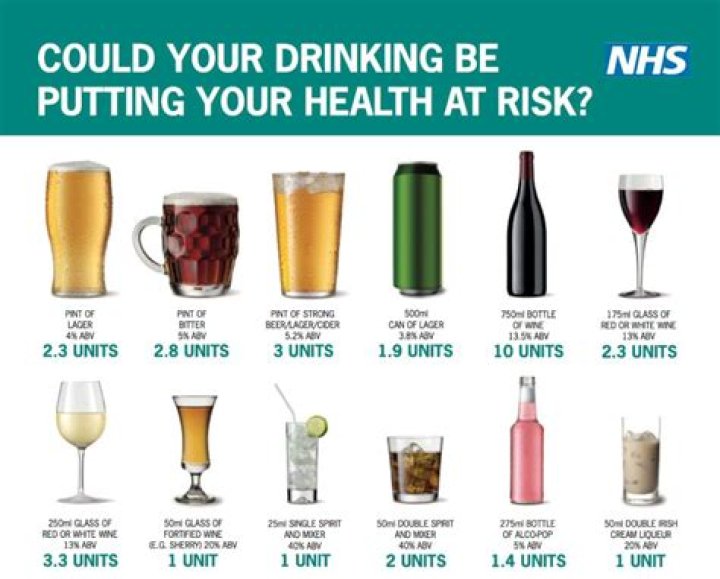
Alcohol distillation is essentially the process of separating the more volatile alcohol component from the less volatile water component of an aqueous alcohol solution by heating the solution, condensing it and capturing rich vapors. produced in alcohol, as a liquid with a high alcohol content. (Ghost).
What alcoholic drinks are made by distillation?
Here are the sources of some popular alcoholic beverages: Ale - fermented from hopped malt Beer - brewed and fermented from grain malt (.
 What two processes are involved in distillation?
Classical distillation or distillation is the process of separating components or substances from a liquid mixture by selective boiling and condensing. Dry distillation is the heating of solids to form gaseous products (which can condense into liquids or solids).
 Batch distillation process
Batch distillation is a process in which two liquids with different boiling points are heated, vaporized and then cooled to produce a new product with a higher concentration in one of the two liquids. No new liquid is added to the kettle during batch distillation, so the product concentration will change over time as the mixture boils and the final product is removed.
 What can be separated using distillation?
Distillation is a process often used to separate homogeneous mixtures of liquids. During distillation, the mixtures are separated from the substances in the mixture at different boiling points. An example of a homogeneous mixture that can be separated by distillation is a mixture of salt and water.
 What are types of distillation?
Distillation is the process of purifying compounds based on their volatility. The different types of distillation include simple distillation, fractional distillation, steam distillation, vacuum distillation, and short distillation.
 What is the separating mixture of distillation?
Distillation is an effective method of separating mixtures of two or more pure liquids. Distillation is a purification process in which the components of a liquid mixture are evaporated, then condensed and released. In simple distillation, the mixture is heated and the lighter component evaporates at a lower temperature.
 What are types of oils need distillation?
What types of oils should be distilled. The residual raw material of yellow fat, animal fat and vegetable oil (WVO) consists of odors and impurities that must be removed during the distillation process. Rapeseed (rapeseed), palm and jatropha, which are processed oily raw materials, have a specific odor that must be removed.
 What equipment is used in distillation?
Equipment used for water purification and distillation includes demineralized (DI) water systems, water stills, reactive water systems, and laboratory filters.
What is this process for extracting oils called?
The phytonic process is one of the newest methods of extracting hydrocarbon essential oils without CFCs (non-chlorofluorocarbons). It is also called phytol extraction and oil phytol extraction.
 What happens in a filtration process?
Filtration is the process of removing particles from a suspension in water. Removal occurs through several mechanisms including seepage, flocculation, sedimentation and surface containment.
 What are the methods used for filtration?
Filtration Methods General Filtration: In the simplest form of filtration, the mixture is filtered by gravity. Vacuum Filtration - A Buchner bottle and hose are used to create a vacuum to draw liquid through a filter (usually by gravity). Cold Filtration - Cold filtration is used to quickly cool the solution resulting in the formation of fine crystals.
What are the mechanisms of filtration?
FILTRATION: The mechanisms by which particles are retained by the filter are generally only relevant in the early stages of liquid filtration. After the particulate precoat has been applied, it is filtered through a filter cake, with the filter medium serving only as a carrier.
What is the apparatus required for filtration?
The basic requirements for filtration are: (1) a filter medium (2) a liquid with suspended solids (3) a driving force such as a pressure drop to circulate the liquid and (4) a mechanical device (filter) that controls the middle filter , contains liquid and allows the use of force.